
How renewable energy systems paired with clean transport offer real cost savings and competitive differentiation in the logistics market.
Editor's Note (October 2026): This article was originally published on the date shown. Certain solar tax credits, incentives, and program requirements have since changed. Contact Critical Mass Solar for information about programs currently applicable to your project.
This post highlights the role of solar, energy, electric trucks, and sustainability in reshaping modern moving companies. Learn how renewable energy systems paired with clean transport offer real cost savings and competitive differentiation in the logistics market.
Overview of Solar-Powered Moving Companies
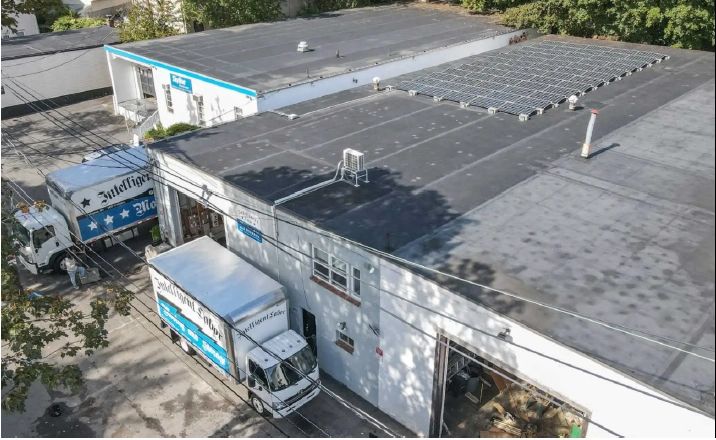
A standout example is Intelligent Labor & Moving, based in Arlington and Hudson, MA. Operating with warehouses powered by rooftop solar panels, they fuel their electric moving trucks, heat and cool their offices with air-source heat pumps, and have eliminated nearly all diesel usage for local routes.
This model defies traditional moving business norms by blending clean energy infrastructure with logistics operations—delivering greener service and demonstrating environmental leadership.
Solar & Energy Innovations at Intelligent Labor & Moving
The company installed a 17.1 kW photovoltaic array in 2016, with 60 solar panels sized to meet (and exceed) all warehouse electricity needs. Thanks to Massachusetts' net metering policy, generation credits offset electricity use, creating virtual savings. LED lighting retrofits and HVAC upgrades further enhanced energy efficiency and aligned building load with solar output.
They became the first in Massachusetts—and reportedly the world—to operate a SEA-Electric powered Hino electric moving truck, delivered in August 2021, followed by a second unit in early 2023. Specs include a 138 kWh battery pack (roughly double a Tesla Model 3), 130–150 miles range in real-world conditions, and cargo capacity of ~19,500 lbs GVW. These trucks are charged onsite via solar generation and net metering, dramatically lowering operational fuel costs.
Energy Economics—Cost Savings & Operational Impact
Thanks to solar + net metering in Massachusetts, the company effectively removed utility energy costs. Their electric trucks operate nearly entirely from renewable on-site generation. Diesel expense dropped by about 50%, from ~$30k/year to ~$16k/year.
Managed Charging Strategies & Utility Rate Hedging
Studies show that managed charging, timed during off-peak hours, can reduce fleet charging costs by as much as 30%. Intelligent Labor signals EVs to charge overnight or during low-rate periods, aligning with lower wholesale rates and avoiding demand-charge peaks. The company deliberately created energy demand—by electrifying trucks and HVAC—to consume their own solar output.
Sustainability & Branding in the Residential Moving Industry
Intelligent Labor differentiates itself by weaving environmental care, worker commitment, and clean fleet operation into its identity. Despite limited direct customer demand, visible actions like EVs at events educate clients and gradually build awareness.
Challenges & Lessons Learned
- Scaling solar across multi-tenant buildings is difficult—e.g., the second warehouse lacks solar only because it's part of an industrial condo requiring group approval.
- Customer demand for green moving services remains low—but proactive outreach (EV showcases, state consultations) builds visibility.
Conclusion: Lessons from the Solar-Driven Logistics Model
This company's experience shows that solar, electric trucks, and intelligent energy management create a compelling case for small moving businesses to go green—and profitable. By combining solar generation, EV deployment, smart charging, and efficiency upgrades, they've minimized energy costs, reduced emissions, and differentiated their brand.