
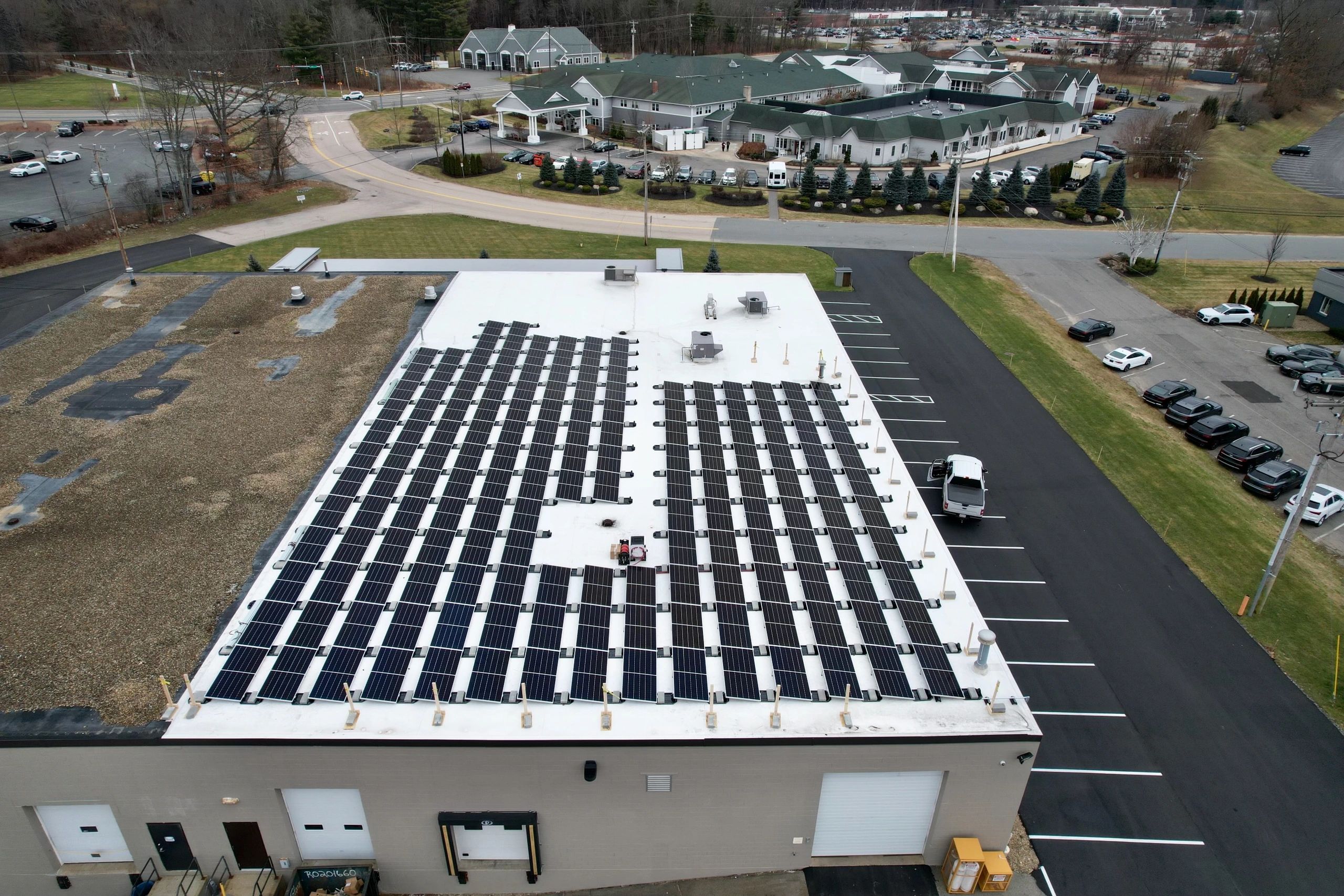
Businesses across Massachusetts and New Hampshire are switching to solar—and for good reason. With rising energy costs, valuable tax incentives, and sustainability becoming a priority, commercial solar is a smart financial decision.
Editor's Note (October 2026): This article was originally published on the date shown. Certain solar tax credits, incentives, and program requirements have since changed. Contact Critical Mass Solar for information about programs currently applicable to your project.
Businesses across Massachusetts and New Hampshire are switching to solar—and for good reason. With rising energy costs, valuable tax incentives, and sustainability becoming a priority, commercial solar is no longer just an environmental move—it's a smart financial decision.
1. Lower Operating Costs & Energy Bills
Electricity costs are one of the biggest operating expenses for businesses. Solar can significantly reduce energy costs, turning a fluctuating utility bill into predictable, low-cost energy for decades. A warehouse in Massachusetts spending $3,000/month on electricity that offsets 70% of usage cuts its bill to $900/month—more than $25,000 in savings every year. A car dealership in New Hampshire that fully covers its energy needs with solar eliminates a $2,500 monthly electric bill, adding up to $300,000 in savings over ten years.
2. Tax Incentives & Rebates Reduce Costs
- Federal Investment Tax Credit (ITC): Businesses can deduct 30% of the total system cost from their federal taxes.
- Accelerated Depreciation (MACRS): Allows businesses to depreciate 85% of the system cost in the first year.
- State & Utility Rebates: Massachusetts and New Hampshire offer additional incentives, making solar even more affordable.
With these programs, many businesses recoup 50-60% of their investment within the first year.
3. A High Return on Investment
- Most commercial solar systems pay for themselves within 5-7 years.
- Businesses typically see a 15-20% return on investment (ROI)—higher than many traditional investments.
- Instead of throwing money at utility bills, solar allows businesses to invest in their own energy independence.
4. Protection Against Rising Utility Rates
- With solar, your business locks in predictable energy costs for 25+ years.
- No more worrying about utility rate hikes or fluctuating energy expenses.
- Some businesses also choose to add battery storage to store excess power for peak usage times or outages.
5. Sustainability is Good for Business
- Enhance brand image as a leader in clean energy.
- Meet corporate sustainability goals and qualify for green initiatives.
- Attract eco-conscious customers, partners, and investors.
Which Businesses Benefit Most from Solar?
- Car dealerships with large roof space and high energy demand
- Warehouses and distribution centers that need to control operating costs
- Farms and agricultural operations looking for long-term savings and additional incentives
- Retailers and grocery stores that want to keep overhead costs low
- Hotels and resorts looking to reduce long-term operational expenses
- Manufacturers with high energy consumption
Is Commercial Solar Right for Your Business? Let's Talk.
At Critical Mass Solar, we help businesses in Massachusetts and New Hampshire take control of their energy costs with custom solar solutions. We offer a free energy savings analysis tailored to your business, custom system designs that maximize efficiency and incentives, and guidance on financing, tax credits, and state rebate programs.
If you're curious about what solar could do for your business, let's start a conversation. No pressure, just answers.